There are few wildlife experiences as unforgettable as watching a whale emerge from the ocean. Along Mexico’s Baja California Peninsula, travelers have the remarkable opportunity to witness these magnificent animals in two very different environments: the open waters surrounding Cabo San Lucas and the protected coastal lagoons near Guerrero Negro.
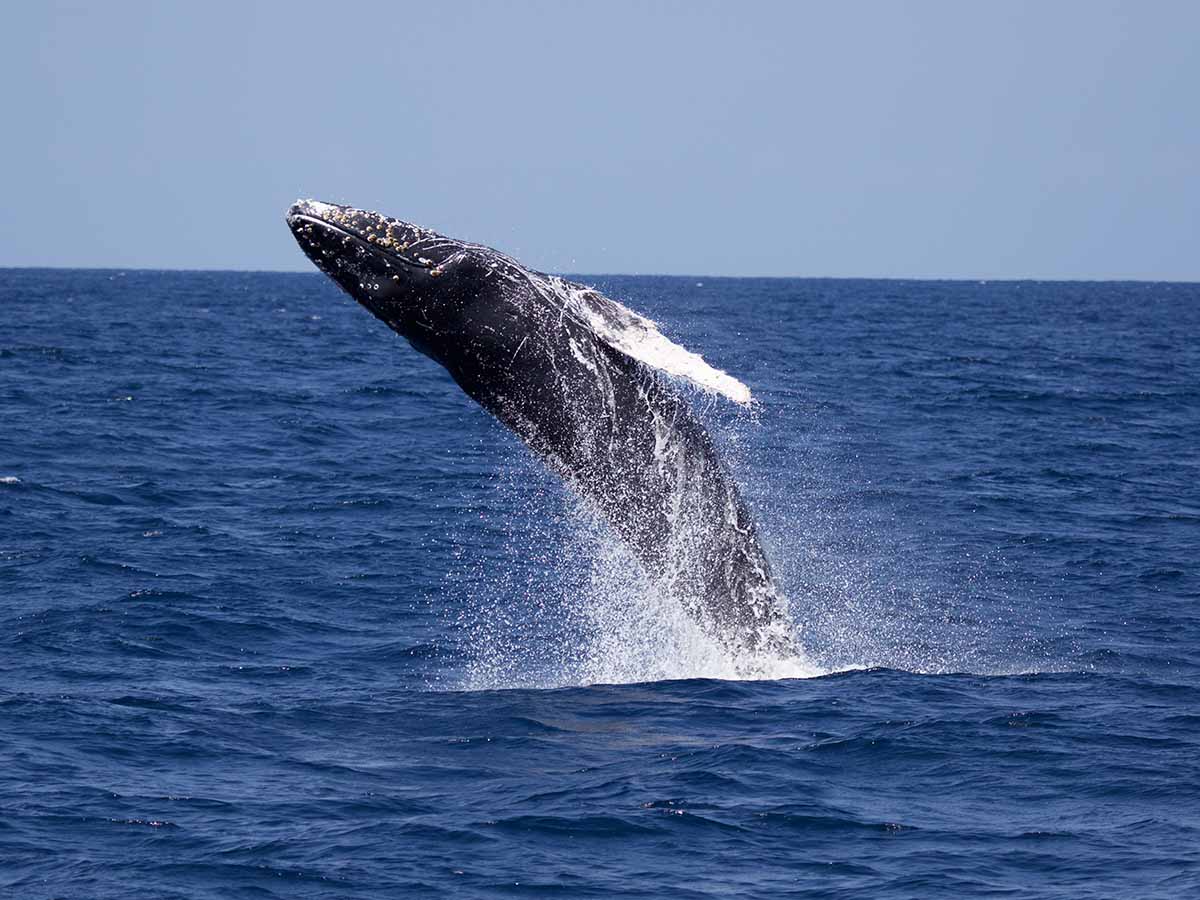
Imagine watching a humpback whale breach against the dramatic coastline of Los Cabos. Then picture a grey whale and her calf surfacing in the calm waters of Laguna Ojo de Liebre, one of the most important grey whale breeding and calving habitats in the world.
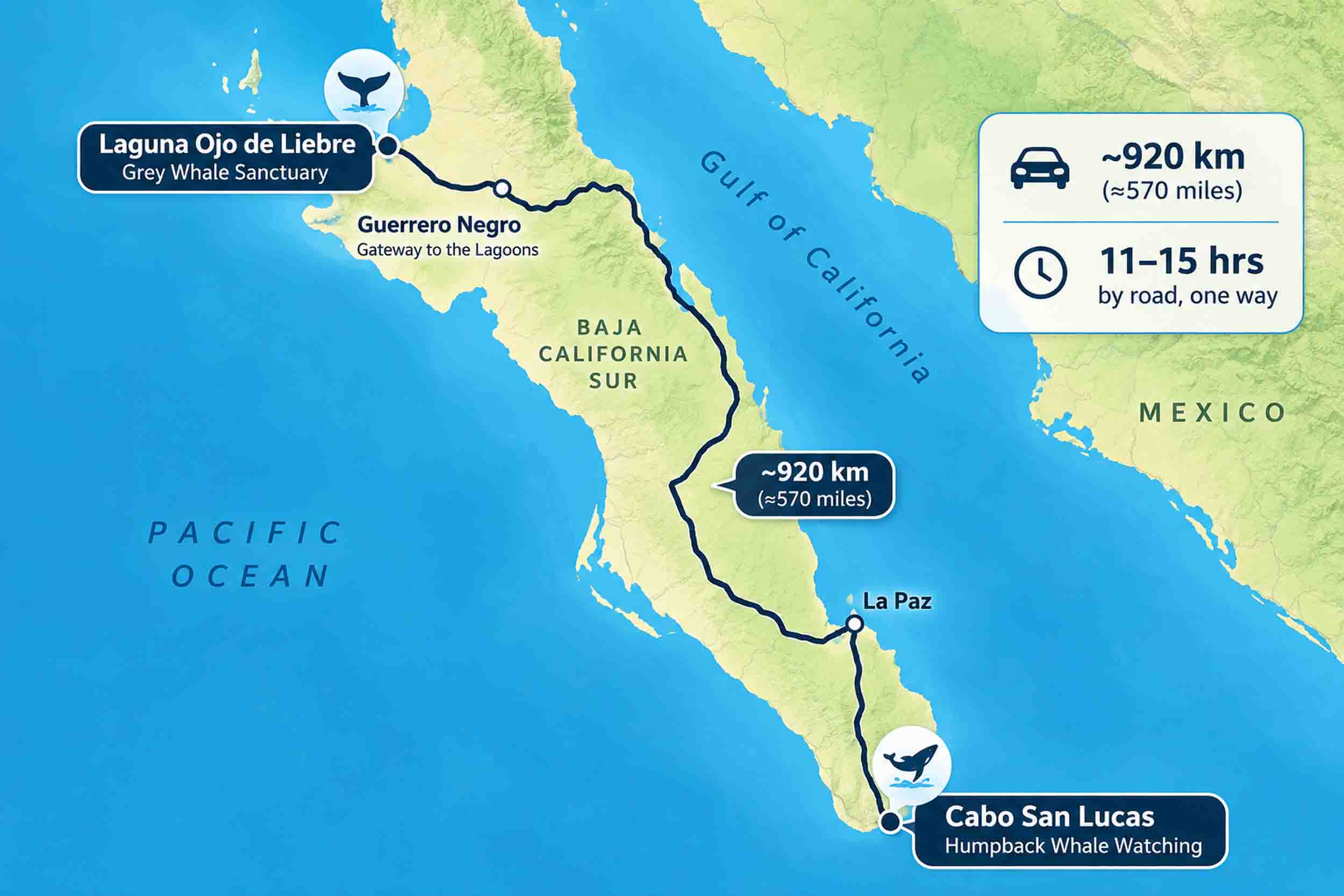
Both destinations offer extraordinary experiences, but they are separated by hundreds of miles and require very different travel arrangements.
For sophisticated leisure travelers and families, InCabo Travel makes these encounters accessible through personalized whale-watching excursions and exclusive expeditions designed around comfort, expert guidance, and meaningful connections with nature.
Where Are the Best Places to See Whales in Baja California?
Two of Baja California’s most rewarding whale-watching destinations are Cabo San Lucas, at the southern tip of the peninsula, and Laguna Ojo de Liebre, near Guerrero Negro on the Pacific coast.
Cabo San Lucas is particularly well known for humpback whales, which migrate to the region’s warmer waters during winter. Whale-watching excursions depart from the marina and explore nearby areas where whales may be observed surfacing, breaching, and traveling along the coast.
Farther north, Guerrero Negro serves as a gateway to Laguna Ojo de Liebre, a protected lagoon where grey whales gather during their winter breeding and calving season.
The two destinations offer different experiences, from the excitement of open-ocean whale watching to the quieter atmosphere of Baja’s remarkable grey whale nurseries.
Cabo San Lucas – Humpback Whale Watching at the Southern Tip of Baja
Cabo San Lucas is one of Mexico’s most accessible whale-watching destinations.
Located where the Pacific Ocean meets the southern waters of the Sea of Cortez, Cabo provides a spectacular setting for observing humpback whales during their annual winter migration.
The surrounding coastline is famous for Land’s End and El Arco, the dramatic rock formation that has become an internationally recognized symbol of Los Cabos.
During whale-watching season, excursions departing Cabo San Lucas Marina can explore waters near these landmarks and farther offshore, depending on whale activity and sea conditions.
Humpback whales are particularly exciting to observe because of their dramatic surface behavior. They may launch themselves out of the water, slap their tails against the ocean, or raise their enormous pectoral fins above the surface.
These behaviors make Cabo especially appealing to first-time whale watchers, wildlife photographers, and families hoping to experience one of nature’s most impressive spectacles.
Where Around Cabo San Lucas Can You See Whales?
Whales move freely throughout the surrounding waters, so there is no single location where sightings are guaranteed.
However, several areas are particularly relevant to Cabo whale-watching excursions.
Land’s End and El Arco
The waters surrounding Land’s End provide a dramatic introduction to the Cabo coastline. Although the famous Arch is primarily a sightseeing landmark, whale-watching boats may encounter humpbacks in nearby waters during the season.
The Pacific Coast
The Pacific waters west of Cabo San Lucas are part of the region’s seasonal humpback whale habitat. Captains may explore suitable offshore areas based on conditions and recent whale activity.
The Southern Sea of Cortez
The waters east of Cabo San Lucas also provide seasonal opportunities to observe humpback whales. The Sea of Cortez is celebrated for its marine biodiversity, making the broader region especially attractive to travelers interested in ocean wildlife.
InCabo Travel’s guided whale-watching excursion in Cabo provides an accessible way to experience these waters with knowledgeable guides.
The standard excursion typically lasts approximately 1.5 to 2 hours, with private boating upgrades available for guests seeking additional comfort and exclusivity.
Guerrero Negro – The Gateway to Baja’s Grey Whale Nurseries
Travel north along the Baja California Peninsula and the landscape begins to change.
The bustling resorts and dramatic rock formations of Los Cabos give way to expansive desert scenery, coastal wetlands, salt flats, and remote natural environments.
Near the border between Baja California Sur and Baja California lies Guerrero Negro, a town best known for its salt production and proximity to important grey whale habitats.
For whale-watching travelers, Guerrero Negro is more than a destination on the map. It serves as a gateway to one of the world’s most extraordinary marine wildlife environments.
Each winter, grey whales migrate south from northern Pacific feeding grounds to Baja’s protected coastal lagoons.
These environments provide important areas for mating, giving birth, and caring for newborn calves.
While Guerrero Negro provides access and visitor services, the principal destination for InCabo Travel’s grey whale expedition is nearby Laguna Ojo de Liebre.
Laguna Ojo de Liebre – A Remarkable Grey Whale Sanctuary
Laguna Ojo de Liebre, also known as Scammon’s Lagoon, is one of Baja California’s most important grey whale breeding and calving habitats.
The lagoon is part of the El Vizcaíno protected region and offers an environment dramatically different from the open ocean surrounding Cabo San Lucas.
Its expansive, relatively sheltered waters provide important habitat for grey whales during their winter reproductive season.
Mothers and calves gather in the lagoon before beginning their long migration north.
For visitors, whale watching here is a distinctive experience.
Rather than searching the open ocean for breaching humpbacks, travelers board small, locally operated boats known as pangas and explore designated observation areas within the lagoon.
Grey whales may be seen surfacing, spy-hopping, rolling, or swimming alongside their calves.
Occasionally, curious whales approach observation boats on their own. Such encounters are never guaranteed, and responsible operators follow regulations designed to protect the animals and their habitat.
The opportunity to observe these remarkable mammals in their winter nursery makes Laguna Ojo de Liebre an exceptional destination for nature enthusiasts and wildlife photographers.
Why Is Laguna Ojo de Liebre So Important for Grey Whales?
Laguna Ojo de Liebre is one of the principal winter gathering areas for North Pacific grey whales.
Its protected geography provides suitable conditions for mating, calving, and nursing.
The lagoon is especially significant because it supports a substantial concentration of mothers and calves during the winter season.
Grey whales undertake one of the animal kingdom’s most remarkable annual migrations, traveling thousands of miles between northern feeding grounds and Baja’s warmer coastal waters.
Observing them in Laguna Ojo de Liebre offers travelers a rare perspective on an essential part of that life cycle.
The surrounding landscape adds to the experience. Expansive salt flats, desert scenery, coastal wetlands, and migratory birds create a destination that feels worlds away from the resorts of Los Cabos.
How Do You Get from Cabo San Lucas to Guerrero Negro?
This is one of the most important practical considerations for travelers interested in grey whale watching.
Guerrero Negro is located hundreds of miles north of Cabo San Lucas, making it a substantial overland journey.
For travelers with limited vacation time, reaching the lagoon by road and returning to Los Cabos can require more time than they wish to devote to transportation.
InCabo Travel addresses this challenge with its exclusive Grey Whale Expedition to Guerrero Negro.
The experience begins with a private King Air charter flight from Los Cabos to Guerrero Negro, taking approximately 1.5 hours each way.
Upon arrival, guests continue by private ground transportation to the lagoon access area, where guided panga excursions provide opportunities to observe grey whales in their natural habitat.
The full-day experience includes dedicated naturalist guidance, private transportation, lunch, refreshments, and applicable park fees.
This thoughtfully arranged expedition allows travelers to explore a remote Baja wildlife destination and return to Los Cabos the same day.
For those seeking a more immersive adventure, InCabo Travel also offers a multi-day grey whale expedition with additional opportunities to explore the surrounding region.
When Is the Best Time to Visit Each Whale-Watching Destination?
Although both destinations are associated with winter whale migrations, the most favorable travel periods differ slightly.
| Destination | Main Whale Species | Recommended Visiting Period |
| Cabo San Lucas | Humpback whales | January through March |
| Guerrero Negro | Grey whales | February through March |
| Laguna Ojo de Liebre | Grey whales, including mothers and calves | February through March |
Cabo’s broader humpback whale-watching season generally extends from December through April.
Grey whales occupy Baja’s breeding lagoons during winter and early spring, although InCabo Travel schedules its private Guerrero Negro expedition specifically from February through the second week of March.
For travelers interested in visiting both destinations during the same vacation, February and early March offer a particularly attractive planning window.
Can You Experience Both Whale-Watching Destinations During One Los Cabos Vacation?
Yes, and for travelers passionate about marine wildlife, combining both destinations can create an extraordinary Baja adventure.
One day can be devoted to humpback whale watching near Cabo San Lucas, where the dramatic coastline and open-ocean environment provide a memorable introduction to the region’s marine life.
On another day, guests can travel by private aircraft to Guerrero Negro for an immersive grey whale experience in Laguna Ojo de Liebre.
The contrast between these locations is part of what makes the combination so appealing.
Cabo offers dramatic scenery, convenient departures, and exciting humpback whale activity.
Laguna Ojo de Liebre offers a more remote setting where grey whales gather with their calves in protected waters.
Travelers interested in understanding the differences between these experiences can also read InCabo Travel’s guide to humpback versus grey whale watching in Baja California, which introduces the region’s whale-watching opportunities.
Why Choose InCabo Travel to Explore Baja’s Whale-Watching Destinations?
Experiencing Baja California’s whale-watching destinations involves more than selecting a boat excursion.
The geography, seasonal conditions, transportation requirements, and individual interests of travelers all influence how an experience should be planned.
InCabo Travel specializes in creating personalized experiences for sophisticated leisure travelers and families who appreciate thoughtful arrangements and exceptional service.
For guests staying in Los Cabos, the company offers guided humpback whale-watching excursions with opportunities for more private boating experiences.
For travelers seeking something extraordinary, its Guerrero Negro expedition combines private aviation, ground transportation, naturalist expertise, and guided lagoon visits into a carefully coordinated adventure.
This ability to connect travelers with both accessible and remote destinations makes InCabo Travel a preferred destination management company for exploring the natural wonders of Baja California Sur.
Frequently Asked Questions About Whale-Watching Locations in Baja California
Where is the best place to see humpback whales in Baja California?
Cabo San Lucas is one of the most accessible destinations for observing humpback whales during winter. Excursions explore the waters around Land’s End, the Pacific coastline, and the southern Sea of Cortez.
Where can you see grey whales in Baja California?
Grey whales gather in several protected Pacific coastal lagoons, including Laguna Ojo de Liebre near Guerrero Negro, Laguna San Ignacio, and Magdalena Bay.
Is Guerrero Negro the same place as Laguna Ojo de Liebre?
No. Guerrero Negro is the nearby town and gateway to the region, while Laguna Ojo de Liebre is the protected coastal lagoon where guided grey whale-watching excursions take place.
How far is Guerrero Negro from Cabo San Lucas?
Guerrero Negro is several hundred miles north of Cabo San Lucas. Because overland travel is lengthy, InCabo Travel offers a private flight taking approximately 1.5 hours each way.
What is special about Laguna Ojo de Liebre?
Laguna Ojo de Liebre is one of the most important winter breeding and calving habitats for North Pacific grey whales. Its protected waters provide opportunities to observe whales, including mothers and calves, under regulated conditions.
Can you visit Guerrero Negro on a day trip from Cabo?
Yes. InCabo Travel offers a full-day private expedition from Los Cabos to Guerrero Negro using chartered aircraft, private ground transportation, and guided lagoon excursions.
What month is best for visiting both whale-watching destinations?
February is an especially attractive month because humpback whale activity around Cabo San Lucas and grey whale activity in Baja’s breeding lagoons overlap.
Are whale sightings guaranteed at either location?
No. Whales are wild animals, and their movements and behaviors vary. Experienced guides can select appropriate viewing areas, but sightings and particular interactions cannot be guaranteed.
Explore Baja’s Extraordinary Whale-Watching Destinations with InCabo Travel
From the dramatic waters surrounding Cabo San Lucas to the protected grey whale nurseries near Guerrero Negro, Baja California offers two distinctly memorable ways to experience the ocean’s magnificent giants.
One destination brings travelers face to face with the excitement of humpback whales against Cabo’s spectacular coastline. The other reveals the quieter beauty of Laguna Ojo de Liebre, where grey whales gather during an essential stage of their annual migration.
With InCabo Travel, both destinations can become part of a personalized Los Cabos vacation.
Whether you’re planning a family wildlife adventure, an intimate private excursion, or an exclusive expedition to a remote natural sanctuary, InCabo Travel can help you experience the remarkable marine life of Baja California in comfort and style.